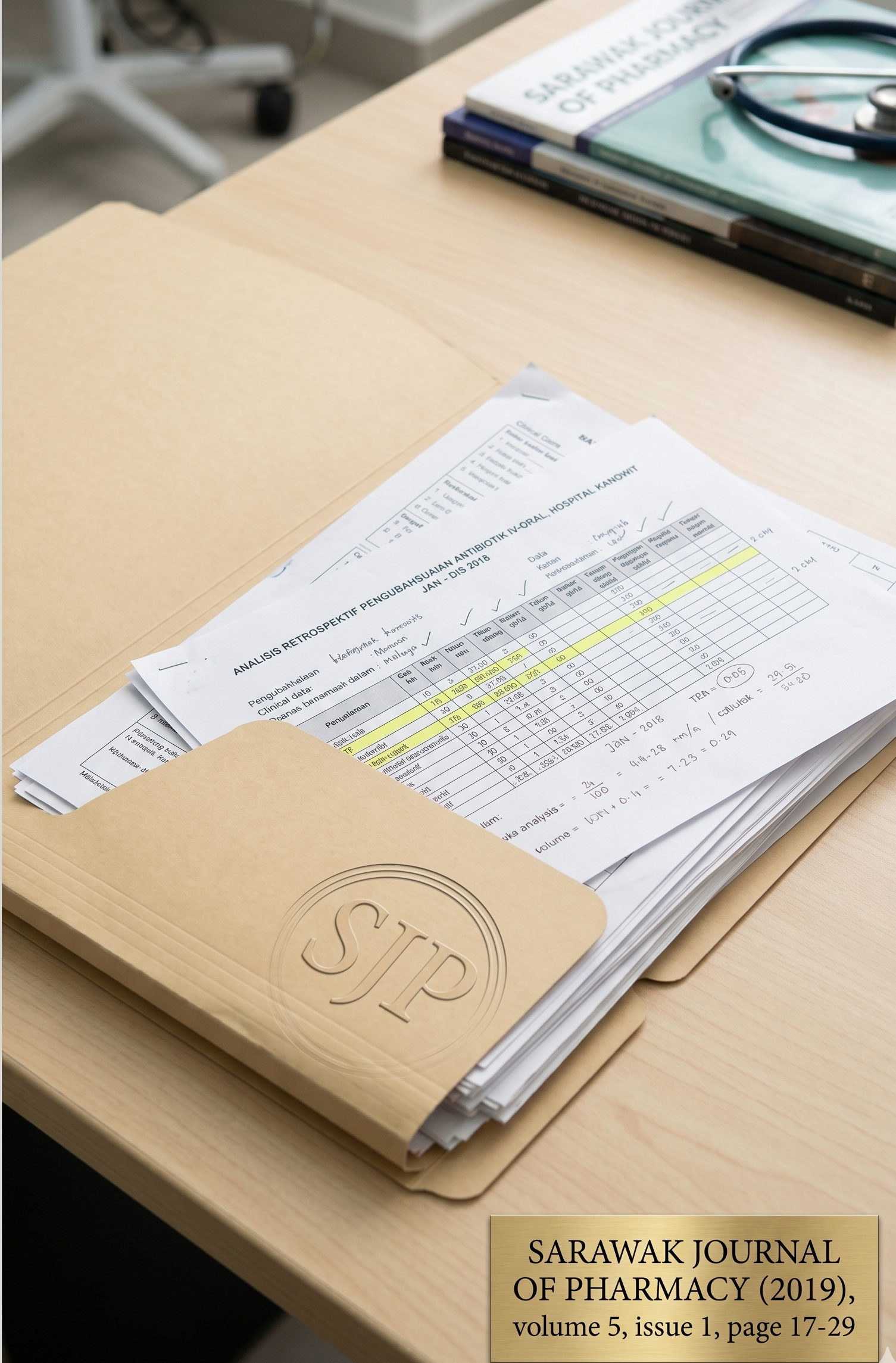
A Review on the Intravenous Oral Antibiotic Conversion Practice in Hospital Kanowit: A Retrospective Study
Keywords:
Intravenous oral switch, antibiotic, practiceAbstract
Introduction:
Antimicrobial resistance is one of the most serious public health issues around the globe. Intravenous Oral Switch (IVOS) practice is important in delaying antimicrobial resistance. Hence, information on our IVOS practice helps improve our effort against antimicrobial resistance.
Objective:
In this study, we aimed to review current intravenous oral antibiotic conversion practice in Hospital Kanowit.
Methods:
We conducted a retrospective observational study in Hospital Kanowit. Patient’s information obtained from the medical records unit. All names recorded in the tally card of the intravenous antibiotics between 1st October 2015 and 31st December 2015 screened for possible inclusion. Descriptive analysis was conducted on the mean duration of intravenous antibiotics uses before IVOS. Mann-Whitney test used to compare the length of stay (LOS) between groups based on early IVOS, while one-way ANOVA test used to compare the duration of intravenous antibiotics use among groups based on results of culture and sensitivity by using the Statistical Package for the Social Sciences (SPSS) version 15.
Results and Discussion:
63 prescriptions identified, screened, and 39 were eligible for early IVOS. Mean age of the patients was 60 years (SD=18.6 years). Mean duration of intravenous antibiotics used before IVOS done was 2.92 days (SD=1.16 days), and the mean LOS was 7.72 days (SD=4.50 days). We found that early IVOS did not reduce the LOS of the patient in hospital significantly (P = 0.906), possibly due to other co-morbidity, logistic and social issues. Results of culture and sensitivity did not significantly affect means duration of antibiotic used before IVOS (P =0.132).
Conclusion:
Large array of IV antibiotics was eligible for early IVOS (61.9%), our rate for early IVOS was 76.9%. Local IVOS guideline is necessary, and we have yet to accomplish an ideal intravenous to oral conversion program in our day-to-day clinical practice. Thus continuous effort needed.
Downloads
Published
Issue
Section
License
Copyright (c) 2019 Shing Chyi Loo , Swee San Ngo , Chew Siang Yeoh , Chui Lin Ting , Nur Rosidah Jamal, Chieng Ting Lo (Author)

This work is licensed under a Creative Commons Attribution 4.0 International License.
 Sarawak Journal of Pharmacy