A pre- and post-intervention study on the knowledge of High-alert Medications (HAM) among staff nurses in Sarawak General Hospital (SGH)
Keywords:
High-alert Medications (HAMs), knowledge, nursesAbstract
Introduction:
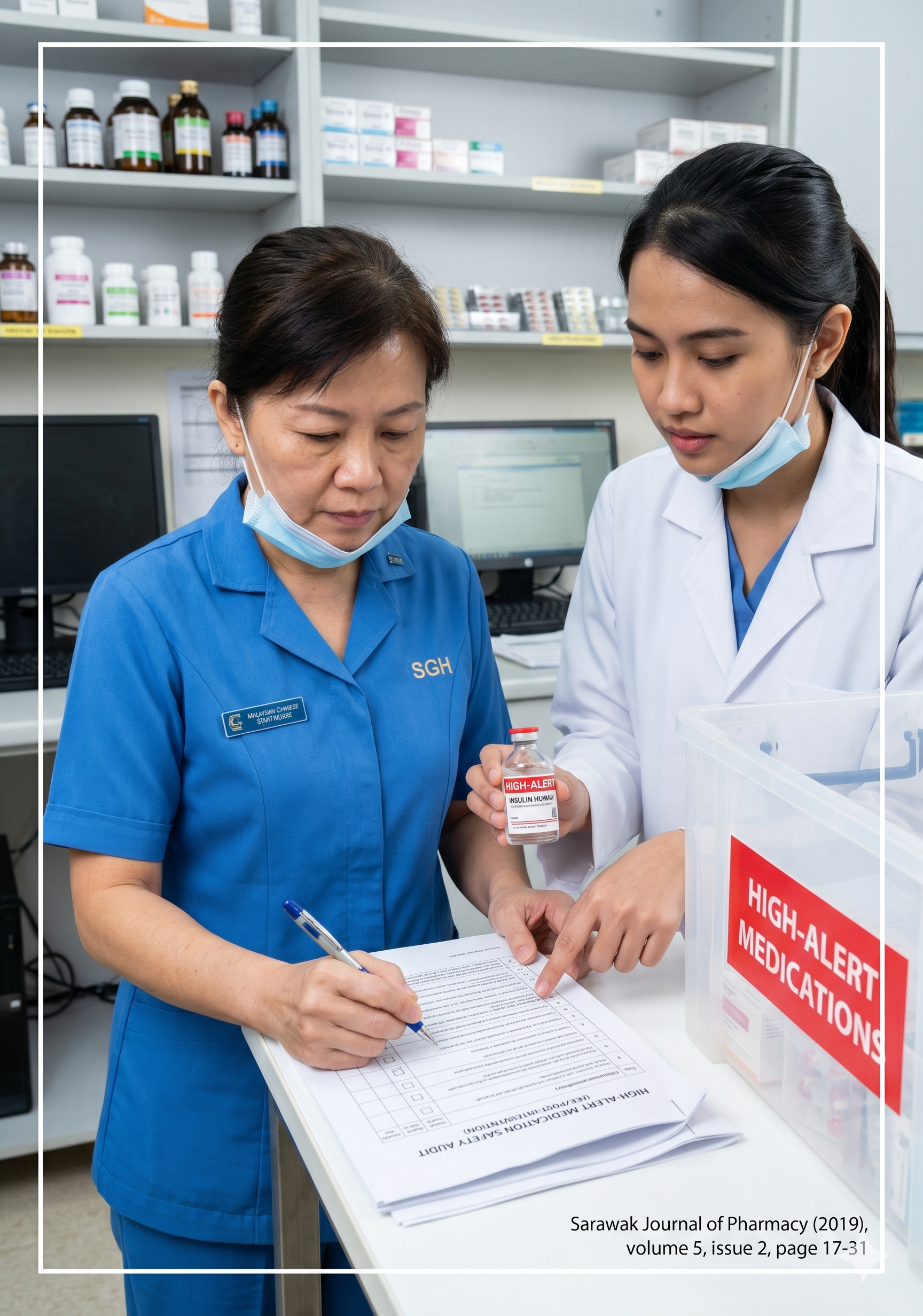
Studies had shown that the leading factor contributing to medication administration errors in hospitals was inadequate knowledge. Fortunately, most errors did not cause harm to patients; those that did often involve high alert medications (HAMs). Hence, it is vital for nurses in charge of medication administration to acquire sufficient knowledge about HAMs. This paper aims to evaluate the effectiveness of an educational intervention in strengthening nurses’ knowledge towards HAM in SGH.
Methods:
We conducted a pre-post intervention study among nurses in SGH. An educational intervention on four main groups of high-alert medications (insulin, anticoagulants, adrenergic agonist agents and injectable Potassium Chloride) given. Their knowledge regarding these medications were assessed using a validated self-developed questionnaire. Participating nurses had to answer a similar set of questionnaire three times: just before the intervention (pre-test), right after the intervention (post-test 1) and four months later (post-test 2). The tests correspond to the measurement of current, immediate retention and long-term retention of knowledge respectively.
Results:
A total of 105 staff nurses participated. The mean score difference for pre- and post-test 1 was 5.57 (p<0.01). However, the score of post-test 2 was lower as compared to post-test 1, with a significant mean difference of 3.31 (p <0.01). Nevertheless, the post-test 2 score was still higher than the pre-intervention score, with a mean difference of 2.26 (p=0.003). Years of service, age and educational background did not influence knowledge score. This result suggests that the intervention is useful in improving knowledge about HAM among nurses regardless of seniority nor education level, and improvement in knowledge score is still significantly sustained after four months.
Conclusion:
The proposed intervention tool is appropriate and useful in improving knowledge about high alert medication among nurses. However, to ensure proper retention of knowledge, regular update on HAM from time-to-time is needed.
Downloads
Published
Issue
Section
License
Copyright (c) 2019 Lie Jin Pang, Miaw Ling Liap, Wei Wern Khor, Nyuk Tsuey Liew, Wan Jing Pui, Mei Yih Li, Jia Min Long (Author)

This work is licensed under a Creative Commons Attribution 4.0 International License.
 Sarawak Journal of Pharmacy