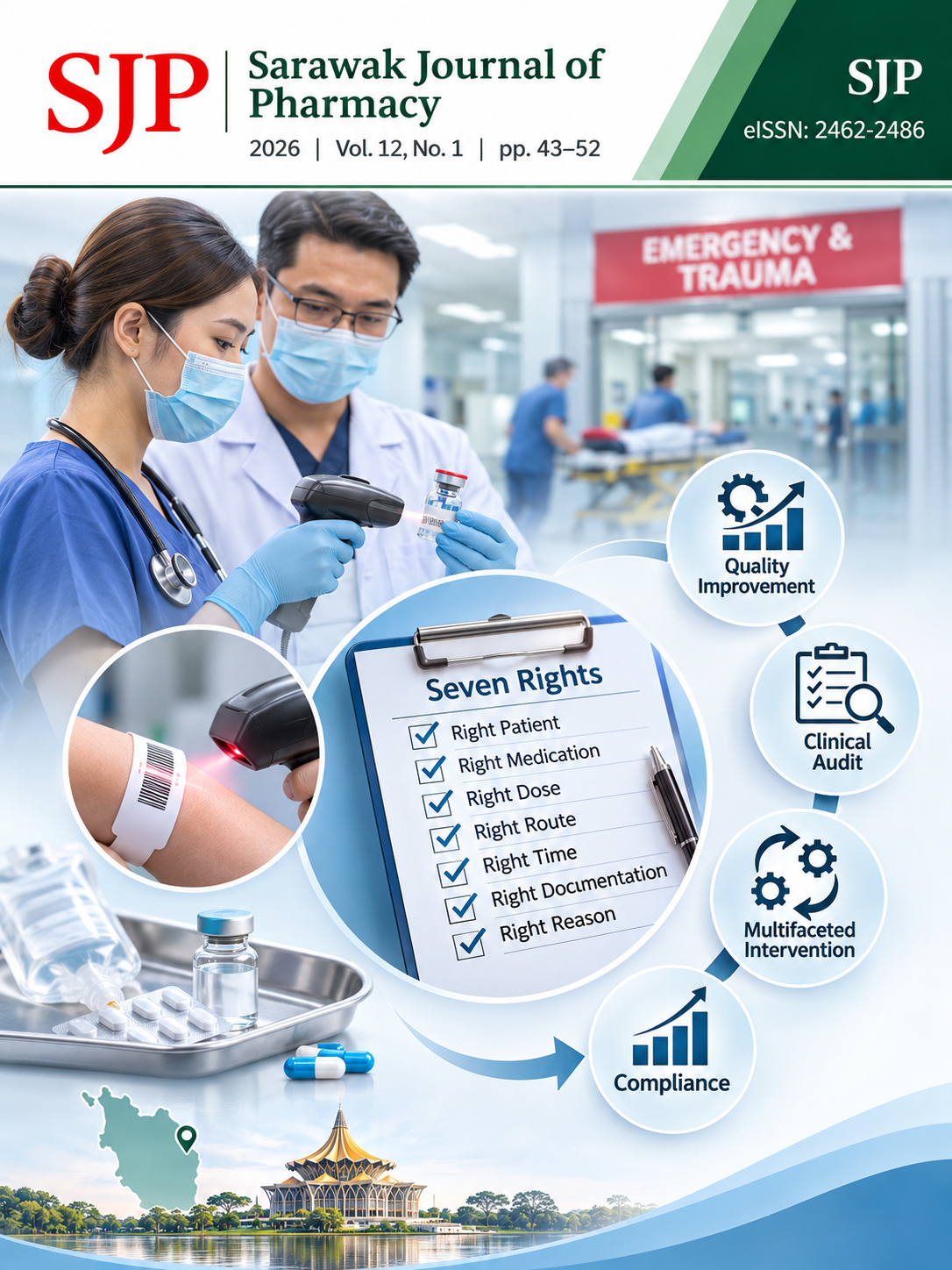
Improving Compliance with the Seven Rights of Medication Administration Through a Multifaceted Quality Improvement Intervention: A Clinical Audit in an Emergency and Trauma Department
Keywords:
Clinical Audit, Seven rights of medication administration, Emergency and Trauma , Medication SafetyAbstract
Introduction:
Medication administration errors remain a major cause of preventable patient harm, particularly in high-acuity settings such as Emergency and Trauma Departments (ETD). Although adherence to the seven rights of medication administration is fundamental to medication safety, maintaining consistent compliance in busy emergency care settings remains challenging. This study aimed to assess baseline compliance with the seven rights of medication administration among healthcare personnel in the ETD and evaluate changes following a multifaceted quality improvement intervention.
Methods:
A prospective clinical audit comprising three sequential audit cycles was conducted in the ETD of Hospital Tawau, Sabah, Malaysia, from March to August 2025. Medication administration events were directly observed using a structured audit checklist adapted from the Malaysian Patient Safety Goals 2.0. Following the baseline audit, a multifaceted intervention comprising structured education, protocol standardisation, clinical pharmacist involvement, and workflow redesign was implemented. Compliance was reassessed through two re-audit cycles.
Results:
During the baseline audit (n=25), full compliance with all seven rights was achieved in 16 events (64.0%). Medication administration timing was the most frequent area of non-compliance (n=4, 44.4%). Following the intervention, full compliance was achieved in all medication administration events during the first re-audit (n=31, 100%) and second re-audit (n=42, 100%). Reported medication errors also decreased during the audit period based on institutional incident reporting and departmental monitoring records.
Conclusion:
This clinical audit suggested that a multifaceted quality improvement intervention was associated with improved adherence to the seven rights of medication administration in an emergency department. Integrating structured education, protocol standardisation, clinical pharmacist involvement, and workflow redesign may strengthen medication safety. Further multicentre studies with longer follow-up are warranted to evaluate the sustainability and the validity of these findings.
Downloads
Published
Issue
Section
License
Copyright (c) 2026 Sarawak Journal of Pharmacy

This work is licensed under a Creative Commons Attribution 4.0 International License.
 Sarawak Journal of Pharmacy