
Parental Knowledge and Practice on Liquid Medication for the Use of Children at Home
Keywords:
Liquid medication, paediatric, parental knowledge, practiceAbstract
Introduction:
Little is known about medication errors among paediatrics that occur at home. Previous studies have shown that the majority of medication errors among children occur during medication administration.
Objective:
This study aimed to identify parental knowledge and practice on liquid medication for children; to determine whether intervention during medication dispensing is needed to reduce medication errors among children that occur at home.
Methods:
We conducted a cross-sectional study in the Paediatric Medical Ward of Sarawak General Hospital from August until September 2018. Data were collected using a selfadministered questionnaire available in Malay and English and analysed using SPSS software. Questionnaire items were self-developed and validated in a cohort of 20 patients locally. The items were then tested for reliability using Cronbach’s alpha.
Results:
A total of 251 parents included. Antipyretics (87.6%) along with cough & cold medicines (61.8%) were the most common type of medication given by parents for acute illnesses. Most parents obtained their children’s medication from government health facilities
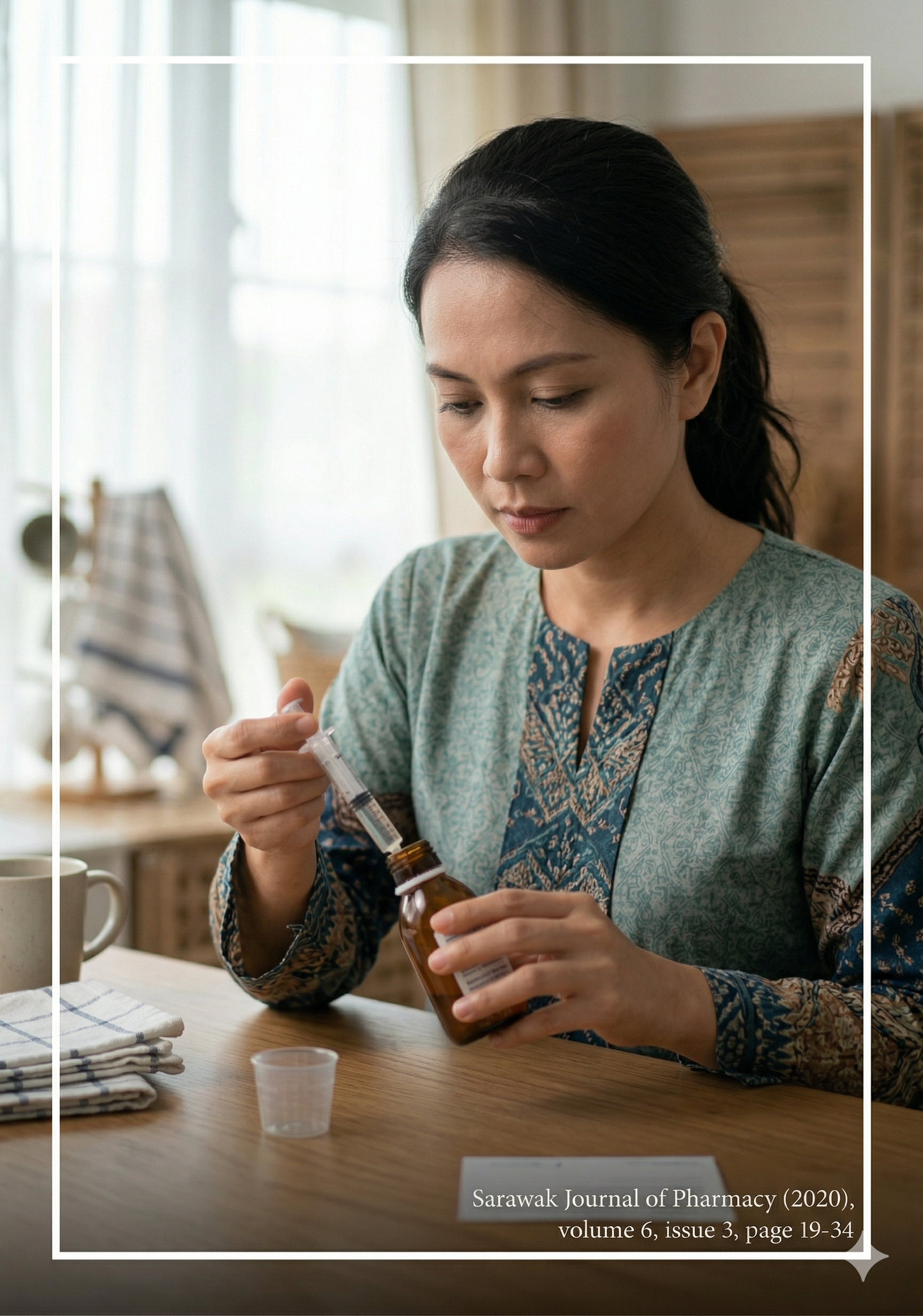
(88.0%) and received information on liquid medication from healthcare professionals, namely doctors (82.9%) and pharmacists (60.2%). In terms of medication administration, only 49.8% of parents measured the correct volume of medication using oral syringes. 24.3% of parents used tablespoons whilst 27.5% used teaspoons at least once to administer liquid medication to their children. More than 20% of parents were unaware of the stability of reconstituted antibiotics while 56.2% had a wrong understanding on the storage of the liquid medication. Parents with higher education level had better knowledge of liquid medication in terms of understanding vehicle used to reconstitute oral antibiotics, dosing, measurement as well as storage (p<0.05).
Conclusion:
There are some areas in which parental knowledge of liquid medication are lacking. It is also worth considering having standardisation on dosing tools for liquid medication to avoid dosing errors.
 Sarawak Journal of Pharmacy