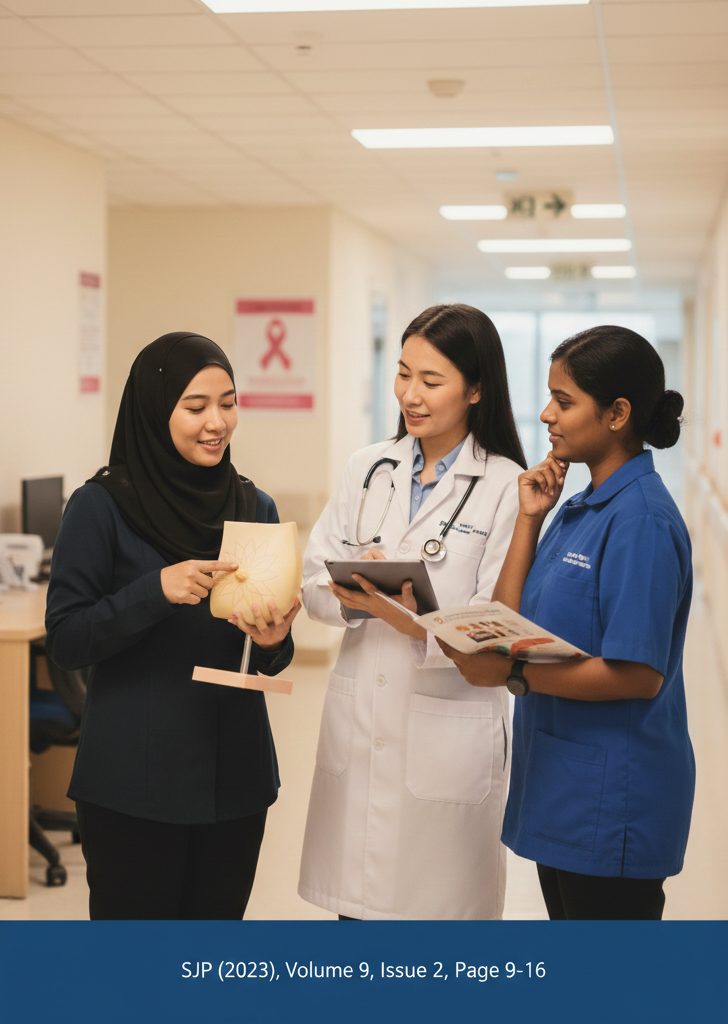
Breast Self-Examination Awareness, Knowledge, Practice and Attitudes among Female Healthcare Workers in a Public Malaysian Hospital
Keywords:
Breast cancer, breast self-examination, healthcare workers, screeningAbstract
Introduction:
Breast cancer remains a global health concern with escalating incidence rates, emphasising the urgency of effective early detection strategies. This study aimed to evaluate the awareness, knowledge, practice, and attitudes towards breast self-examination (BSE) among female healthcare workers.
Methods:
This was a cross-sectional study conducted at Miri Hospital adopting a validated, self-administered questionnaire from March to April 2023. Female healthcare workers aged 18 years and above, able to read and understand English or Malay language were eligible to participate. The questionnaire gathered respondents' information regarding their demographics and awareness, knowledge, practice, and attitudes towards BSE. Results were summarised using descriptive statistics.
Results:
A total of 223 eligible respondents completed and returned the questionnaire. The majority were married (67.7%) and had a mean age of 37.1 ± 7.9 years. The majority of them were aware of BSE (96.9%) and possessed good knowledge of BSE (74.4%). However, recognition of skin dimpling as a sign of breast cancer was observed in around half (57.4%) of respondents. While 81.6% had practised BSE, correct implementation was reported by a mere 12.1%. The majority of respondents agree that BSE helps in breast cancer detection (95.5%), not difficult to perform (87.9%) and not time-wasting (94.6%), yet respondents were afraid of finding signs indicative of breast cancer (64.6%).
Conclusion:
This study underscores a notable disparity between awareness, knowledge, and the correct practice of BSE among female healthcare workers. The identified gap emphasizes the necessity to explore and address barriers hindering proper implementation, particularly among educated healthcare professionals. Bridging this divide not only enhances the breast health of healthcare workers but also holds the potential to catalyse broader breast cancer prevention initiatives within the community.
 Sarawak Journal of Pharmacy