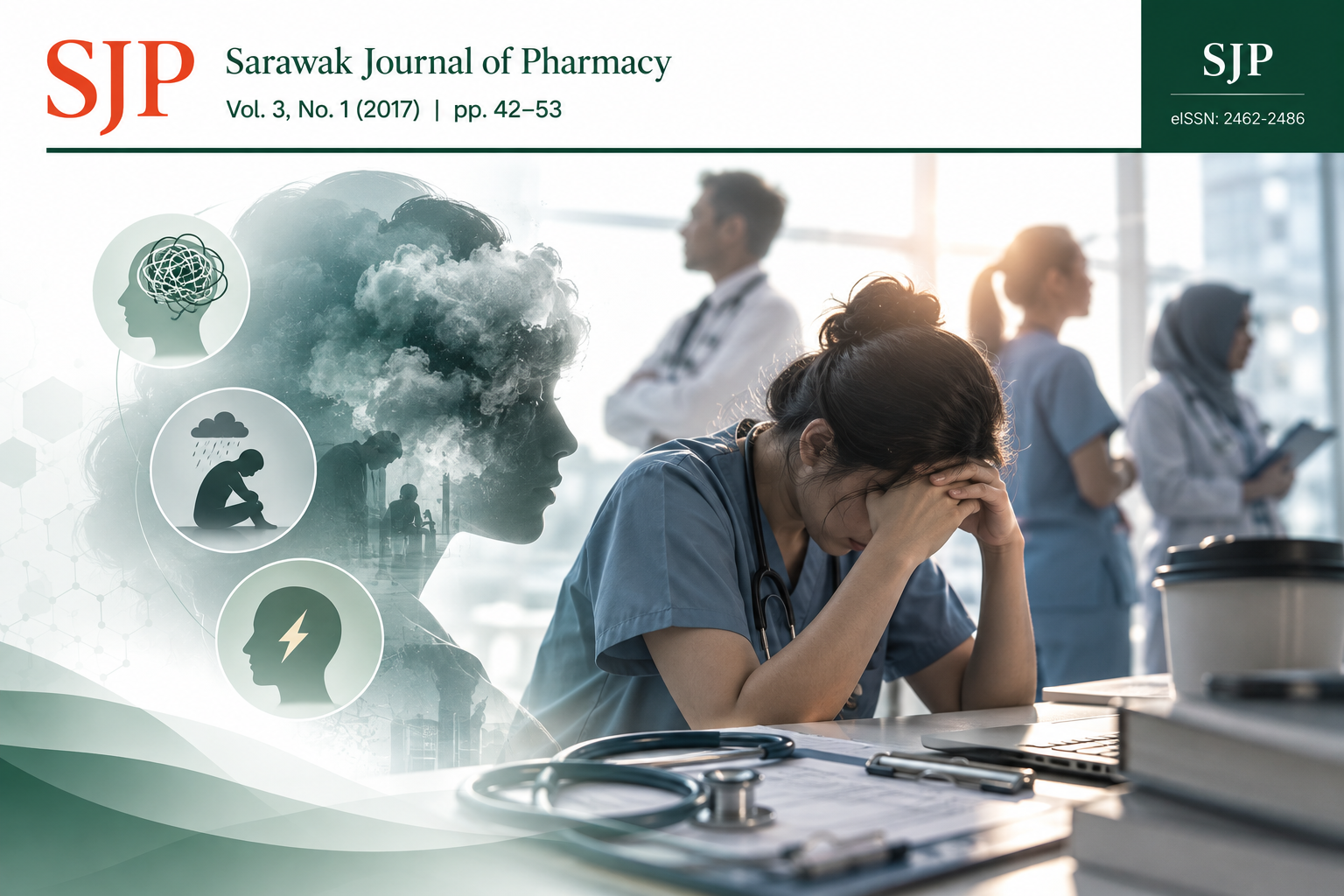
Depression, anxiety and stress among healthcare professionals (DASHCP): A cross sectional study
Keywords:
Depression, Anxiety, Stress, Healthcare professional, DASSAbstract
Introduction:
Depression, anxiety and stress are common among healthcare professionals as they need to deal with patients’ health condition from time to time.
Objective:
The purpose of the study is to determine the prevalence of depression, anxiety and stress among doctors, pharmacists and nurses working in Hospital Miri, Sarawak, and its association with other sociodemographic factors.
Method:
This cross-sectional study using a two-section questionnaire containing individual sociodemographic information and a validated questionnaire – Depression, Anxiety and Stress Scale (DASS) 21 conducted among healthcare professionals (doctors, pharmacists and nurses), from September to November 2017 in male and female medical wards in Hospital Miri.
Results:
In terms of depression status, more than half (59.5%) of the participants scored normal while 9.5%, 11.9%, 4.8% and 14.3% reported mild, moderate, severe and extremely severe respectively. The average depression score is 11.19 (±10.46) and categorised as mild
depression. For anxiety status, 33.3% of the participants reported normal level, while 19%, 14.3%, and 2.4% of participants reported mild, moderate and severe level respectively. However, almost one third (31%) of the participants reported extremely severe anxiety. The average anxiety score is 11.71 (±8.83) and it categorised as moderate anxiety. For stress status, 64.3% of participants reported normal level of stress while 14.3% scored mild and severe. Only 2.4% and 4.8% of the participants scored moderate and extremely severe stress level. The average stress score is 13.81 (±10.44) and categorised as normal stress level. Prevalence for moderate to extremely severe depression, anxiety and stress are 31%, 47.6%, and 21.4% respectively. Higher average working hours has significant association with higher level of depression and stress (p=0.004).
Conclusion:
This study has showed the prevalence of depression and anxiety among healthcare professionals are concerning. High level of depression, anxiety and stress may have detrimental effect to the performance of healthcare professionals which can lead to negative outcomes. This should warrant needs for strategic plans to ease depression, anxiety and the stressors especially in medical field.
Downloads
Published
Issue
Section
License
Copyright (c) 2017 Sarawak Journal of Pharmacy

This work is licensed under a Creative Commons Attribution 4.0 International License.
 Sarawak Journal of Pharmacy