
Use of lipid modifying agents in Miri Hospital
Keywords:
Statin, lipid modifying agents, prescribing patternAbstract
Introduction:
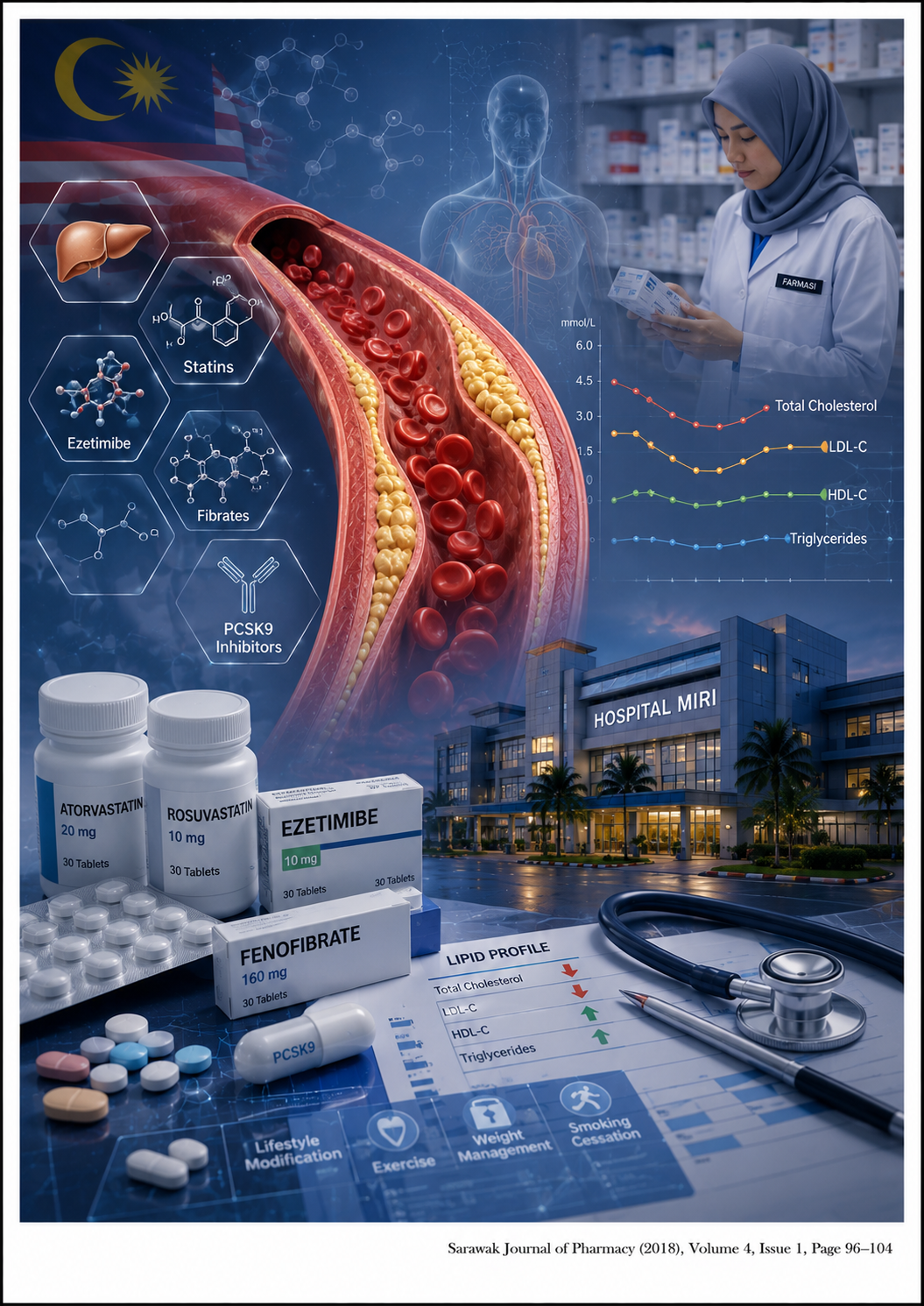
In Malaysia, cardiovascular disease (CVD) is an important cause of morbidity and mortality in both men and women. The common cardiovascular (CV) risk factors include hypercholesterolemia, diabetes, hypertension overweight/obesity and smoking. Lipid lowering agents widely used worldwide to reduce the risk of coronary events. However, there is wide variation in the selection and use of these agents. This study aims to analyse the prescription patterns and its relationship with costs of lipid-lowering agents in Hospital Miri.
Methods:
Data on drug prescriptions gathered from Pharmacy Information System (PhIS) to support medical practice in Hospital Miri from January to December 2017. ATC/DDD methodology used. Annual cost of the lipid lowering agents prescribed also determined. Total dose for every active ingredient calculated. Number of DDDs per-1,000 inhabitants’ per-day statistically determined according to WHO ATC/DDD system. Costs analysed by calculating the cost/DDD for each active ingredient based on the price purchased by Logistics Department of Pharmacy Hospital Miri.
Results:
In 2017, statin is the most prescribed lipid modifying agent (97.3%) in Hospital Miri, followed by fibrates (0.77%), other modifying agent (0.14%), and HMG CoA reductase inhibitors in combination with other lipid modifying agents (0.57%). The most prescribed statin was atorvastatin (57%), followed by simvastatin (43%), pravastatin (0.34%) and rosuvastatin (0.22%).
Conclusion:
Atorvastatin and simvastatin commonly prescribed as they are safe, cost effective and well-tolerated by patients. Statin therapy will continue to play a major role in reducing cardiovascular health burden and health care cost in midst of increasing prevalence of CV risk factors among Malaysia adult population.

 Sarawak Journal of Pharmacy